
_1735099214534.webp)
Harnessing the Power of Salvianolic Acid Powder for Skin Repair and Rejuvenation
In the ever-evolving world of skincare, natural ingredients are taking center stage. One such powerhouse compound that's garnering attention is Salvianolic Acid Powder. Derived from the roots of Salvia miltiorrhiza, commonly known as red sage or Danshen, this potent extract is revolutionizing the way we approach skin repair and rejuvenation. Let's delve into the remarkable properties of Salvianolic Acid Powder and explore how it's transforming the landscape of skincare.
Unveiling the Secrets of Salvianolic Acid Powder
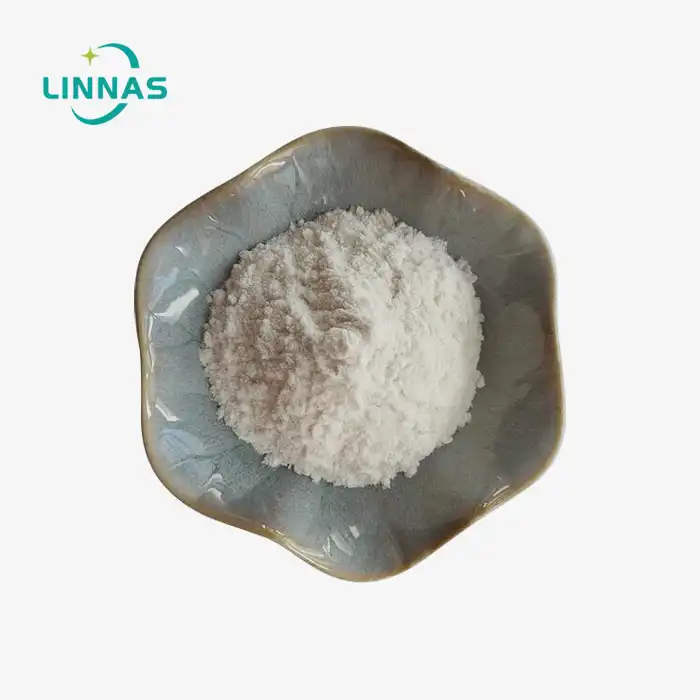
Salvianolic Acid Powder is a concentrated extract obtained from the roots of Salvia miltiorrhiza, a plant that has been used in traditional Chinese medicine for centuries. This brown-yellow powder is rich in bioactive compounds, particularly salvianolic acids, which are responsible for its numerous health benefits.
The extraction process of Salvianolic Acid Powder is a testament to modern scientific advancements. With a high purity of ≥98% and an impressive extraction ratio of 10:1, this powder packs a powerful punch. Its fine particle size, with 100% passing through an 80 mesh, ensures optimal absorption and efficacy when used in skincare formulations.
What sets Salvianolic Acid Powder apart is its unique composition. It contains a specific blend of Tanshinone IIA (0.3%) and salvianolic acid B (7%), as determined by High-Performance Liquid Chromatography (HPLC). This precise combination contributes to its extraordinary skin-rejuvenating properties.
The Science Behind Salvianolic Acid's Skin-Repairing Prowess
Salvianolic Acid Powder's ability to repair and rejuvenate skin is rooted in its potent antioxidant properties. As we age, our skin becomes increasingly susceptible to damage from free radicals – unstable molecules that can cause oxidative stress, leading to premature aging and various skin concerns.
Enter Salvianolic Acid Powder. This powerful antioxidant acts as a scavenger, neutralizing free radicals and protecting skin cells from oxidative damage. By doing so, it helps to maintain the skin's structural integrity and promote a more youthful appearance.
But the benefits of Salvianolic Acid Powder don't stop at antioxidant protection. Research has shown that it also possesses remarkable anti-inflammatory properties. Inflammation is a key factor in many skin issues, from acne to premature aging. By reducing inflammation, Salvianolic Acid Powder helps to soothe irritated skin, reduce redness, and promote a more even complexion.
Furthermore, Salvianolic Acid Powder has been found to stimulate collagen production. Collagen is the protein responsible for maintaining skin's elasticity and firmness. As we age, our natural collagen production decreases, leading to the formation of wrinkles and sagging skin. By boosting collagen synthesis, Salvianolic Acid Powder helps to improve skin's elasticity, reduce the appearance of fine lines and wrinkles, and promote a more youthful, plump appearance.
Incorporating Salvianolic Acid Powder into Your Skincare Routine
The versatility of Salvianolic Acid Powder makes it an excellent addition to various skincare products. From serums and moisturizers to masks and toners, this powerful ingredient can enhance the efficacy of your skincare routine.
When choosing products containing Salvianolic Acid Powder, it's essential to look for formulations that ensure optimal stability and absorption. The powder's fine particle size (100% pass 80 mesh) allows for easy incorporation into skincare formulations, ensuring that your skin receives the full benefits of this powerful compound.
For those with sensitive skin, it's worth noting that Salvianolic Acid Powder is generally well-tolerated. Its natural origin and anti-inflammatory properties make it suitable for a wide range of skin types. However, as with any new skincare ingredient, it's always advisable to perform a patch test before incorporating it into your regular routine.
One of the key advantages of Salvianolic Acid Powder is its synergistic effect with other skincare ingredients. When combined with vitamins C and E, for example, its antioxidant properties are amplified, providing even greater protection against environmental stressors. Similarly, when used alongside hyaluronic acid, it can enhance skin hydration and plumping effects.
The benefits of Salvianolic Acid Powder extend beyond topical application. Some studies suggest that oral supplementation of Salvianolic Acid can also contribute to improved skin health. However, it's crucial to consult with a healthcare professional before starting any new supplement regimen.
It's worth noting that the quality of Salvianolic Acid Powder can significantly impact its efficacy. When sourcing this ingredient or products containing it, look for suppliers who adhere to strict quality control measures. For instance, the powder should have a moisture content of ≤5% and heavy metal content of <10 ppm to ensure purity and safety.
Proper storage is also crucial to maintain the potency of Salvianolic Acid Powder. It should be stored in a cool, dry place to prevent degradation. When purchasing products containing this ingredient, opt for packaging that protects the formula from light and air exposure, such as airless pumps or opaque bottles.
While Salvianolic Acid Powder is primarily known for its skin benefits, its effects on overall health are equally impressive. Research suggests that it may support cardiovascular health by improving blood flow and reducing blood pressure. Additionally, it has shown potential in supporting liver health, thanks to its hepatoprotective effects.
Conclusion
In conclusion, Salvianolic Acid Powder represents a significant advancement in natural skincare. Its ability to harness the power of nature for skin repair and rejuvenation is truly remarkable. As we continue to unlock the secrets of this potent extract, one thing is clear: Salvianolic Acid Powder is set to play a pivotal role in the future of skincare. If you're interested in learning more about Salvianolic Acid Powder or other natural plant extracts, don't hesitate to reach out. Contact us at cathy@linnas.com.cn for more information on how these powerful ingredients can transform your skincare products or regimen.
References
1. Wang, J., Xiong, X., & Feng, B. (2013). Cardiovascular effects of salvianolic acid B. Evidence-Based Complementary and Alternative Medicine, 2013, 247948.
2. Zhao, G. R., Zhang, H. M., Ye, T. X., Xiang, Z. J., Yuan, Y. J., Guo, Z. X., & Zhao, L. B. (2008). Characterization of the radical scavenging and antioxidant activities of danshensu and salvianolic acid B. Food and Chemical Toxicology, 46(1), 73-81.
3. Chen, Y. H., Lin, S. J., Ku, H. H., Shiao, M. S., Lin, F. Y., Chen, J. W., & Chen, Y. L. (2001). Salvianolic acid B attenuates VCAM-1 and ICAM-1 expression in TNF-α-treated human aortic endothelial cells. Journal of Cellular Biochemistry, 82(3), 512-521.
4. Cao, W., Guo, X. W., Zheng, H. Z., Li, D. P., Jia, G. B., & Wang, J. (2012). Current progress of research on pharmacologic actions of salvianolic acid B. Chinese Journal of Integrative Medicine, 18(4), 316-320.
5. Ho, J. H., & Hong, C. Y. (2011). Salvianolic acids: small compounds with multiple mechanisms for cardiovascular protection. Journal of Biomedical Science, 18(1), 30.